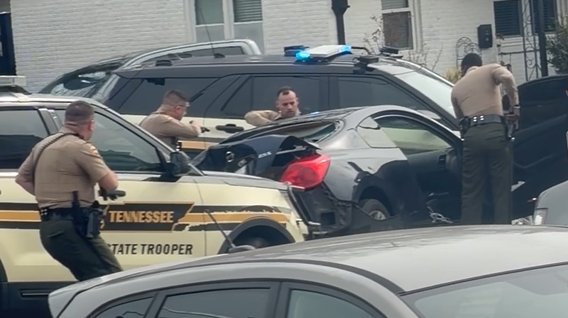


Teams of armed federal agents have been making unannounced visits to the homes of immigrant families across Memphis inquiring about the wellbeing of children.
The “wellness checks’’ are intended to ensure that undocumented children who entered the country without parents do not become victims of human trafficking or other forms of exploitation, government officials say.
But critics say the wellness checks are a pretext to encounter and arrest as many immigrants as possible.
“It seems just to be a (way to get a) foot in the door,’’ said Memphis immigration attorney Andrew J. Rankin, who said he was contacted by a dozen immigrant families in June and July complaining about sudden visits by armed federal agents.

“It’s a legitimate pretext. You could sell it to the American public,’’ Rankin said. “Because what reasonable American citizen is going to be like, ‘Hide the child smugglers. They’re great people.’ So, it legitimizes (this). Then, when (officers) get on the ground and they quickly realize that there is no trafficking going on, then they can get to their real M.O., which is to harass collateral individuals.’’
While making a wellness check in southeast Memphis in May, a team of U.S. Homeland Security Investigations (HSI) agents arrested a 22-year-old Central American native despite his special immigrant legal status that was supposed to protect him from deportation.
The man, “Miguel,” who came here undocumented with his father at age 11, was enrolled at age 17 in the Special Immigrant Juvenile Status (SIJS) program, which offers a path to permanent legal residency to youths who have been victims of abuse, abandonment or neglect. In 2022, he received a grant of deferred action, a form of temporary prosecutorial discretion that was supposed to protect him from removal proceedings until June 2026. Deferred action buys time for SIJS recipients to navigate the long backlog for obtaining a green card, which grants an immigrant permanent residency.
Miguel had legal documents allowing him to stay in the U.S. ICE arrested him and locked him up anyway. Read the story.
Despite those protections, Miguel spent five weeks in detention in Louisiana and now wears an electronic monitoring device on his ankle as he makes his case in Immigration Court to remain in the U.S., according to interviews and court records reviewed by the Institute for Public Service Reporting. The Institute is using a pseudonym to protect his identity because he fears retaliation.
His attorney, Skye Austin, has called the arrest unlawful.
“I think (he) was targeted,’’ she said.

Miguel, who has no criminal record, told a reporter a team of agents showed up at his home asking for his 17-year-old brother, who was in school at the time. The agents then began asking him questions before arresting him. Records of his arrest show authorities at one point tried to get him to sign a voluntary departure form that would have expedited his deportation.
Reports show the team included officers with HSI, which is part of the Department of Homeland Security’s Immigration and Customs Enforcement. Miguel said and at least one was an FBI agent.
His description mirrors those of immigrants who contacted attorney Rankin. The lawyer said immigrants described teams of officers from a variety of agencies including HSI, the FBI, the Bureau of Alcohol, Tobacco, Firearms & Explosives and others. In pressing its mass deportation agenda, the Trump administration has reassigned a number of agents with the FBI and other agencies to help with immigration enforcement.
The FBI’s Nashville office, whose jurisdiction includes Memphis, confirmed it is cooperating in immigration enforcement but provided few details.
“The FBI is supporting our partners at the Department of Homeland Security in their immigration operations all over the country,” FBI spokesperson M. Elizabeth Clement-Webb said in an emailed statement. That includes provided support “as needed” throughout Tennessee, Clement-Webb said, referring questions to the Depatment of Homeland Security (DHS).
Neither DHS nor ICE responded to a series of requests for comment.
DHS officials confirmed in June that they had launched “a national child welfare initiative’’ aimed at locating and verifying the safety of unaccompanied immigrant children. According to a June 5 news release by DHS’ Immigration and Customs Enforcement (ICE) unit, a surge of unaccompanied children entered the U.S. during Joe Biden’s presidency and “were released to sponsors in the United States without proper vetting.’’
“Some of the sponsors had paid smugglers to bring the children into the country or fraudulently claimed familial relationships,’’ the release said.
“…Since the effort’s launch (in February), agents have uncovered alarming instances of abuse and exploitation. Special agents discovered sponsors in possession of child sexual abuse material, those who had forced minors into labor, and those who subjected them to living conditions that constituted neglect,’’ the release said.
The release acknowledged a secondary motive for the wellness checks.
“These welfare checks are not primarily immigration enforcement focused, but if ICE agents or officers encounter individuals who are in the United States illegally, they take them into custody and process them for removal in accordance with federal immigration law,’’ the release said.
The release followed reports by The Washington Post and others revealing that the FBI, HSI, ATF and the U.S. Drug Enforcement Agency were making the checks nationwide. In an April 10 story, The Post reported that agents were checking “minors’ living conditions for drugs, sex, forced labor and signs of trafficking, as well as possible illegal immigration status.’’ DHS had recommended quotas for the number of children each team should contact a day, the report said.
Locally, critics say they believe officials pursuing the wellness checks may be misusing data designed to protect juvenile immigrants. National Public Radio reported in February that officials had reinstated an order from Trump’s first presidency giving ICE agents access to records from the U.S. Department of Health and Human Services’ Office of Refugee Resettlement. Those records contain information about unaccompanied minors and their guardians. Casey Bryant, executive director of Advocates for Immigrant Rights in Memphis, said this could be how local families have come on DHS’s radar.
Immigration attorney Austin had similar theory.
“We have been hearing stories about how when people apply to be guardians for these minors with the Special Immigrant Juvenile Status, ICE agents would knock on the door to do what they called a welfare check. But we felt like these were disguised as to see who’s in the home and what’s going on,” Austin said.