

It goes by various names: Pretextual policing. Investigative stops. Proactive policing. Zero tolerance. Aggressive policing.
No matter what one calls it, it’s highly controversial. Studies show it’s also ineffective, racist and dangerous.
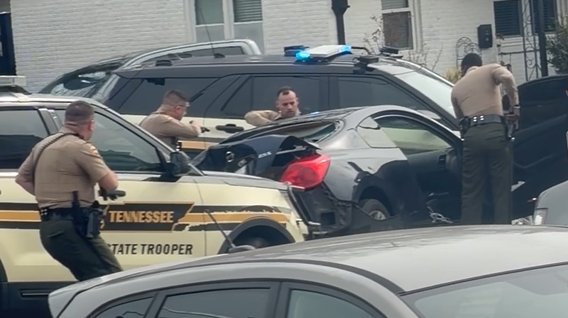
The police strategy of stopping motorists for minor infractions such as driving with a broken taillight or failing to wear a seat belt and then using that as leverage to search a vehicle for illegal guns and drugs has been linked to racial profiling and the erosion of public trust.
“It’s all a façade,’’ said Keedran Franklin, a Memphis criminal justice reform advocate who says intensive traffic-stop operations are less about public safety and more about targeting people of color.
A review of six months of Shelby County arrest data by the Institute for Public Service Reporting found that African-Americans represented 89 of 93 defendants or 96 percent of those arrested after officers stopped motorists for minor infractions and then searched vehicles after saying they smelled marijuana.
But how effective is pretextual policing in fighting crime?
Not very, studies show.
“Evidence suggests that pretextual stops and searches are much less likely (than traditional focused criminal investigations) to uncover evidence of unlawful conduct,’’ according to the Principals of Law, Policing, a best practices position paper advanced by the influential American Law Institute, a Philadelphia-based legal think tank.
With limited exceptions “pretextual policing never should be used as a strategy to further a generalized interest in crime detection or as a broader tool to maintain social order,” says the document, approved in 2022.
Many police departments make regular traffic stops in high-crime areas as a strategy to reduce violence. One such initiative in Memphis was the Street Crimes Operation to Restore Peace In Our Neighborhoods, or SCORPION, a special unit launched in 2021 under then-Mayor Jim Strickland. The data-driven initiative identified upticks in motor vehicle theft and violent crime and then targeted those areas with patrolling SCORPION officers — at times in unmarked cars.

Discussing SCORPION in a January 2022 address, opens in a new windowStrickland said the unit of “four, 10-man teams” had made 566 arrests in its first three months alone, seizing more than “$103,000 in cash, 270 vehicles and 253 weapons.”
An analysis of that data was unavailable. But a study in California found that officers confiscated guns in just 905 of 3.4 million traffic stops made in 2019.
Such operations often come at great cost.
SCORPION was disbanded in 2023 after members of one of its teams beat motorist Tyre Nichols to death.
At least 154 people were killed by police nationwide last year during traffic stops, according to Mapping Police Violence, a project of the police reform advocacy group, Campaign Zero.
Another cost is the erosion of public trust, experts say.
“…There is all-too-plentiful evidence that pretextual enforcement efforts can lead to substantial racial disparities, which can in turn have degraded trust between communities and police,’’ the American Law Institute document says. “Much is gained and little lost by prohibiting pretextual policing in most circumstances.”
A 2018 study commissioned by the Metropolitan Government of Nashville and Davidson County found that a high rate of traffic stops by the Metropolitan Nashville Police Department had little impact in combating serious crime. The report played a role in a decision by Nashville authorities to limit the number of stops police were making.
“This policy of concentrating stops in high-crime areas may be predicated on the belief that traffic stops are an effective tactic for reducing burglaries, robberies, and other criminal activity. We find, however, no immediate or long-term impact of traffic stops on serious crime,’’ said the study by New York University School of Law’s Policing Project.
“We further find that only 1.6% of stops result in a custodial arrest—often for license violations or drugs. These findings suggest that the MNPD could reduce traffic stops without an associated rise in serious crime, while bringing Nashville’s traffic stop rates more in line with similar cities around the country.’’

A Justice Department report launched after Nichols’ death and released Dec. 4 found the Memphis Police Department engages in a pattern of unlawful traffic stops, arrests and evidence collection, emphasizing that it’s impossible to know how far the abuse extends.
“This data does not include hundreds of thousands of traffic stops that did not result in citations, because MPD officers do not document the reason for those stops,” the report said.
The report also said officers are pressured to meet productivity benchmarks, noting that Memphis police stopped one Black man 30 times in three years.
Representatives of MPD declined comment for these stories.
Anecdotal evidence from The Institute’s review of six months of arrest data suggests traffic stops by law enforcement in Shelby County can get results in removing guns and violent criminals from the streets.
During one day three-day stretch in June, The Institute found, MPD arrested at least ten people after smelling marijuana in their vehicles. Five of the suspects had violent arrest histories. sixth with glassy eyes and slow reactions was charged with driving while intoxicated by marijuana.
In those 10 arrests, police confiscated two assault-style rifles, a Glock 17 handgun with a switch that converted it to a rapid-fire machinegun and three other pistols.
There were complications, too.
At times, police filed felony drug-trafficking charges against motorists caught with small amounts of marijuana when it appears a misdemeanor charge or a citation in lieu of arrest would suffice. Such stops can pose hardships for jailed motorists, including loss of employment and steep court costs.
In one case last May, a 20-year-old woman caught with 15.2 grams of marijuana — enough to roll about 15 to 30 marijuana cigarettes — was arrested and charged with felony intent to sell marijuana. Though the charge was later dismissed, her car was towed and held for the Memphis Police Department’s Organized Crime Unit “pending seizure.” It’s unclear through available records whether she got her car back.
“This one has all the red flags of abuse,’’ said longtime Memphis criminal defense attorney Michael Working, who was not involved in the case. “We’re talking about 35, 40 dollars of marijuana tops. If it’s good weed.”
Such arrests can have a devastating impact, Working said.
“People lose their job, they lose their car, they lose their transportation. It’s pretty devastating,” he said.