

In the spring of 2017 when rhetoric about immigrants was heating up, there was a community dinner in my neighborhood that drew neighbors who had moved here from all over the world.
At the end of the meal and some delightful conversation, one of the Spanish speaking women stood up and said to us, “When they come for us, will you stand with us?”
We sat in stunned silence and disbelief. Surely, they wouldn’t come for our neighbors. Surely this was all talk. A few weeks later there were two ICE raids on my street. It had begun.
Now, eight years later, those raids are commonplace. They are random and chilling, terrifying and cruel. Federal agents drag men from their apartments or their cars, pull over women who look Hispanic, break in doors or windows, surround a home with guns drawn.
The agents usually appear with various labels — FBI, HSI, CBP, ICE, ATF, Multi-Gang Unit, ERO, IRS, Police, Sheriff, THP. They come in packs and surround a vehicle or a person or a home. They are undeterred by screams of agony, by the weeping of small children left in a car, by the terrified expressions of one-year-olds plucked from their mother’s arms. They are usually unresponsive to our questions and rarely show cause. No warrant, no reason for suspicion except for the skin color or the accent of the person they are taking away.

Over the past several years, I have responded to raids as a volunteer for Vecindarios 901, a rapid response network that observes and reports on ICE activities. During the first Trump administration, we were getting about five calls a day. After the second Trump administration began, calls increased to 15-20 a day. Since the surge of federal agents began here in October, we have gotten up to 50 panicked calls a day that ICE is picking up people.
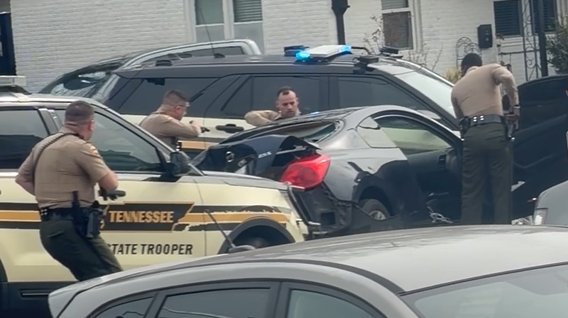
Most recently, several of us witnessed a traffic stop in Midtown where the Tennessee Highway Patrol pulled over two tiny Guatemalan women who were going to get groceries. When the women did not speak English, the THP officers called for Immigration and Customs Enforcement (ICE) agents. By the time we arrived there were five THP vehicles, one unmarked car, and at least 10 agents surrounding the car with the two women sitting inside in terror, weeping.
One of the agents engaged with us, telling us that they had run the tags (which were current) and discovered that the car did not have insurance. Why did they run the tags? Because the women were brown? Because they looked Latino? We don’t know.
The agents wouldn’t let us get near the car, but we were able to talk to the women by phone. One of the women had left her two children at home with her brother while she went to get groceries. She was hysterical. She wanted her children with her if she was going to be detained. The agents in this case were sympathetic, but they were clear that having her children with her in detention would be more traumatizing than leaving them. They said they were sorry, but ICE had to detain this mother. They hoped someone would take care of her children.
When I don’t arrive in time to witness someone being detained, I see the aftereffects. The shattered glass of a car window. Children running down the street after their father as he is thrown into an unmarked car. Workers sitting in abject terror as agents surround their car and check their papers. A family being woken by a pounding at the door and agents laughing as they try to enter the house.
Then there are the long-term effects of this madness: Children too afraid to go to school, afraid that their parents will disappear while they are gone, afraid that they will be taken from their parents if they are home. Families suddenly bereft and without income, families too fearful to go to the grocery store or the doctor. Entire communities, once full of life and spirit and color, now silent and watchful.
These families can’t tell their stories. Why? For fear of retaliation or disappearance, for fear of family separation, for fear of deportation.

Those of us who are white, who live in the bubble of indifference or denial, don’t have to see the damage being done right in front of us. We may feel the effects if our cleaning woman doesn’t show up or our yardman stops coming by. We may see the effects of fewer vegetables and fruits in the grocery store or the difficulty in getting our homes repaired. But we are largely unscathed, unless we begin to notice what is really happening.
Notice the traffic stops where a uniformed police officer or state highway patrol officer is talking to someone in a car and there are five unmarked vehicles behind them. Notice the dark-tinted SUV’s roaming through neighborhoods, their windows so dark you can’t even see a driver. Notice the police and unmarked vehicles in church parking lots or in shopping centers just waiting. Notice the caravans of vehicles parading through black and brown neighborhoods. Or better yet, notice where they aren’t — in our neighborhoods, on our corners, pulling people over on our streets.
What am I asking of us?
Look and see. Notice. Listen. Be aware. See the suffering. See the suffering that our government is inflicting on our immigrant neighbors. Acknowledge and mourn that we have become a nation of cruelty.
Go out of your way to witness. You don’t have to stop but you can call V901 (901-329-7979) and report suspected ICE activity.
Give money to these families through the Immigrant Pantry or the Immigration Relief Fund.
Join clergy and V901 volunteers who are observing immigration court proceedings downtown.
Join volunteers who are delivering food through the Memphis Immigrant Pantry or driving vulnerable people to appointments.
Be willing to accompany and protect. White people have a layer of protection that helps shield vulnerable families. Use it.
And pray without ceasing for our suffering brothers and sisters.